I'm going to name three things and you're going to have to tell me what they all have in common:
- Alaska
- Dahuofang Water Tunnel
- Triumph Rocket III
Have you figured it out, yet? Okay, I'll give you a few more seconds.
Time's up. The answer? They're all really, really big.
Alaska is the largest of the 50 U.S. states. It's more than twice as big as Texas, the next largest state. The Dahuofang Tunnel is a 53-mile-long water tunnel in China and is the longest tunnel in the world. Finally, the Rocket III has the biggest engine of any mass-produced motorcycle. It's a massive 2,292 cc (2.3L) inline three.
To put the size of the Rocket's engine in comparison, the V8 in the Daimler SP250 Dart was 2.5L; Ferrari's first V12 was 1.5L; Harley's biggest current engine is 1.8L; and Triumph's next largest triple is 1.2L.
And it's just not the engine that's big on the Rocket. Everything about the bike is big. It's length is a massive 98 inches, longer than the wheelbase of my '75 Corvette. The gas tank holds 6.3 gallons of fuel. And the weight? It's a ground-pounding 807 lbs for the RIII Roadster and a whopping 869 lbs for the RIII Touring. That's twice the weight of a Triumph Daytona 675, also a triple.
Alright, we've established that the RIII is an oil tanker-sized motorcycle with a big ol' boat anchor of an engine. What kind of power does this lump produce, then? In the RIII Roadster, the 2.3L triple puts out 146 bhp. That's a lot in some respects but not a lot in others. A liter sports bike like the BMW S1000RR will touch 200 bhp. In this case, the Bimmer puts out 193 bhp The 1.7L v-four in the Yamaha VMAX, a close competitor, puts out 174 bhp.
The real trump card for the Rocket is the torque responsible for propelling this machine down the road. That big ol' boat anchor belts out 163 ft.lbs at a diesel-like 2,750 rpm. Ninety percent of that torque is available at 2,000 rpm. The VMAX puts out a piddling 113 ft.lbs way up at 6,600 rpm. And the BMW with all that horsepower? It puts out a positively microscopic 83 ft.lbs all the way up at 9,750 rpm. Pathetic.
The RIII is a celebration of all things big. It's no wonder the model was introduced first in the U.S., the country that loves big, in 2003. To continue my theme of unique and oddball motorcycle, the RIII fits perfectly. This bike is an excess-is-best approach that one can't help but enjoy. I think the RIII is a fantastic bike and it makes all the other supposedly big cruisers look like play things. Cruiser guys love to talk about engine size but nothing short of a Boss Hoss can touch a Rocket in that department.
And the RIII isn't just some fat lump. It's fast, too, and quite a good handler. Triumph originally marketed the RIII as a pure cruiser but the traditional buyers didn't know what to make of it. The RIII was then re-branded as a muscle bike and a tourer and I think it's found its niche. The Roadster is the muscle bike, all black and sinister, and the Touring is the, um, tourer, all soft and chrome. I think the RIII makes more sense this way. Triumph was never going to steal sales from HD with the RIII and this lets the bike be free to go its own way.
Monday, January 21, 2013

Monday, January 14, 2013
Two-Wheeled Twins
When one thinks of Moto Guzzi, the mind naturally goes to longitudinal v-twins and shaft drive. That layout is synonymous with the brand. All their current models use this layout.
During the De Tomaso years, though, a number of inline fours were produced with the Guzzi name on the tank. Guzzi shared De Tomaso ownership with Benelli during the 70s. To confront the Japanese superbike onslaught, Benelli copied a Honda 500 four and added two more cylinders, creating the six-cylinder Sei. Smaller versions of the Sei with four cylinders were produced, badged as the Quattro. Due to the hard work of the Badge Engineering Department at De Tomaso, versions of the Benelli fours rolled out of the plant with Moto Guzzi badging on them.
While the 400 and 500 Quattros were fairly middle of the road by the day's standards, one particular model stood out: the 250 four.
Benelli took their 500 four, stuck it in the copy machine and hit the reduce button a few times. Then, they wrapped it in weird styling where the seat continued up on the gas tank. The gauges were also built into the gas tank. What a busy place, that tank. Benelli versions were sold as the 250 Quattro and Moto Guzzi versions were sold as the 254, a reference to the size of the engine and the number of cylinders.
The little 231cc SOHC four belted out about 30 bhp at a stratospheric 10,500 rpm. Compression was high (11:1), the carbs were tiny (18mm) and the price was enormous. It cost as much or more than many 350cc-class bikes and was quite a bit more than its 250cc-class rivals.
Aside from the frantic engine, the rest of the bike was fairly normal. It had a steel frame, twin shocks and skinny tires. Stopping this screamer was a tiny front disc and a tinier rear drum. One thing in the technical specs that stands out to me is weight. Even though they used an air-cooled four, the bikes managed to be lighter than many of their competitors using twins or singles.
The Benelli twins had flaws deeper than their outrageous price, though. For one, there was the output of the engine. All the power was at the top of the rev range, and since there wasn't much to start with, you had to rev the nuts of it to go anywhere. Its scant torque, 14 lb/ft, was reached way up at 9,000 rpm. There was also the fact that it had five gears, which meant the ratios were longer and that hurt acceleration. Having six gears would have made it easier to keep it on the boil. Top speed was a mere 93 mph.
As flawed as the Benelli twins were, I can't help but like them. I like their small size, both of the bike itself and the engine, and their unique styling. They really didn't look like anything else at the time. Even though they were produced from 1976 to 1986, I feel they aren't well recognized by the public and the motorcycling community. It doesn't hurt that a small four revving to the moon sounds fantastic.


During the De Tomaso years, though, a number of inline fours were produced with the Guzzi name on the tank. Guzzi shared De Tomaso ownership with Benelli during the 70s. To confront the Japanese superbike onslaught, Benelli copied a Honda 500 four and added two more cylinders, creating the six-cylinder Sei. Smaller versions of the Sei with four cylinders were produced, badged as the Quattro. Due to the hard work of the Badge Engineering Department at De Tomaso, versions of the Benelli fours rolled out of the plant with Moto Guzzi badging on them.
While the 400 and 500 Quattros were fairly middle of the road by the day's standards, one particular model stood out: the 250 four.
Benelli took their 500 four, stuck it in the copy machine and hit the reduce button a few times. Then, they wrapped it in weird styling where the seat continued up on the gas tank. The gauges were also built into the gas tank. What a busy place, that tank. Benelli versions were sold as the 250 Quattro and Moto Guzzi versions were sold as the 254, a reference to the size of the engine and the number of cylinders.
The little 231cc SOHC four belted out about 30 bhp at a stratospheric 10,500 rpm. Compression was high (11:1), the carbs were tiny (18mm) and the price was enormous. It cost as much or more than many 350cc-class bikes and was quite a bit more than its 250cc-class rivals.
Aside from the frantic engine, the rest of the bike was fairly normal. It had a steel frame, twin shocks and skinny tires. Stopping this screamer was a tiny front disc and a tinier rear drum. One thing in the technical specs that stands out to me is weight. Even though they used an air-cooled four, the bikes managed to be lighter than many of their competitors using twins or singles.
The Benelli twins had flaws deeper than their outrageous price, though. For one, there was the output of the engine. All the power was at the top of the rev range, and since there wasn't much to start with, you had to rev the nuts of it to go anywhere. Its scant torque, 14 lb/ft, was reached way up at 9,000 rpm. There was also the fact that it had five gears, which meant the ratios were longer and that hurt acceleration. Having six gears would have made it easier to keep it on the boil. Top speed was a mere 93 mph.
As flawed as the Benelli twins were, I can't help but like them. I like their small size, both of the bike itself and the engine, and their unique styling. They really didn't look like anything else at the time. Even though they were produced from 1976 to 1986, I feel they aren't well recognized by the public and the motorcycling community. It doesn't hurt that a small four revving to the moon sounds fantastic.

This is an early version of the 250 Quattro. As you can see, the bodywork was pretty avant garde in some respects, like the gas tank and seat areas, and pretty normal in other areas, like the fenders and wheels.

Here's the nacelle containing the gauges and the ignition switch. While putting them here continues with the styling theme of the bike, it doesn't seem to be very practical. Imagine having to look down at the tank to check your speed or revs. To me, that would have to be very distracting.
Monday, January 7, 2013
NSU Rennmax
If you mention NSU to someone, chances are they'll mention a New Zealand football club, a Cream song or a German terror group. More than likely, they'll have no idea NSU was also the name of a groundbreaking German car and motorcycle company.
NSU started as a knitting machine company that moved on to producing bicycles. Bicycle production was soon joined by car, truck and motorcycle production. Have you ever seen the Kettenkrad, the half-track motorcycle that could climb a 24° slope? That was built by NSU. The first road car to feature the Wankel rotary was also built by NSU.
In the early 50s, NSU set four world speed record. By 1955, NSU was the largest motorcycle manufacturer in the world. One year later, Wilhem Hertz and his NSU broke the 200 mph barrier on a motorcycle. The 1950s also saw NSU win numerous times at the Isle of Man. The optimistically-named NSU Quickly is the best-selling moped of all time, selling over one million units.
The glory was not to last for NSU, though. Along with DKW (oddly, the company NSU surpassed as the world's largest motorcycle manufacturer), they were purchased by Volkswagen in 1969. NSU and DKW were eventually morphed into Audi and dissolved. The final NSU-badged vehicle, the Ro 80, ceased production in 1977 amid reliability woes and an extremely poor resale value.
NSU made many interesting vehicles, such as the Max, the Kettenkrad and the TTS, over their history. A particular model that stands out to me is the 250 Rennmax. It was built to take on the all-conquering Italian bikes of the early 50s, especially the Moto Guzzis ridden by Enrico Lorenzetti and Fergus Anderson.
The Rennmax was a dedicated race bike that shared little, if anything at all, with its road-going NSU brethren. It used a pressed steel monocoque chassis, aluminum bodywork and a one-off parallel twin engine. The engine was a bevel-drive DOHC-type with two valves per cylinder and two carbs. Each cam was operated by its own bevel shaft. It put out 30 hp at 10,500 rpm and was backed up by a five-speed gearbox.
The bike debuted in 1952 and caused quite a stir, despite losing to the Guzzis in the world championship. NSU returned on a mission the following year and Werner Haas won the 125cc and the 250cc championship for NSU.
Eager to continue its winning ways, NSU completely overhauled the Rennmax for 1954. The twin bevel was ditched for a single shaft, which operated the twin cams via an idler gear between them. The bore and stroke were changed and a sixth gear was added to the gearbox. What this meant was more power, up to 36 hp at 11,000 rpm, and a top speed nearing 140 mph with the proper fairing. The 1954 Rennmax dominated the world championship, with Haas winning every race he entered. Haas went on the claim the 1954 title, his second on an NSU. NSU pulled out of racing after the 1954 season but the Rennmax continued to be competitive for a number of years following.
What makes the NSU Rennmax special to me was its competitiveness and its technology. Many of its contemporaries relied on production techniques for their racing bikes. The racing machines weren't much removed from the showroom machines. NSU approached things differently by designing a completely one-off engine that was pretty advanced and using a different frame type. Its competitors used a backbone-style steel frame, similar to most production bikes. The pressed steel monocoque of the Rennmax was a different idea all together. The monocoque frame would be tried decades later by Norton and OSSA, with varying degrees of success.
Another thing I like about the Rennmax was its dominance. It only raced for a few years and managed to win three championships in that short time. That's a hell of a record.
It's a shame that NSU is sort of forgotten. They achieved many great things in the automotive and motorcycle world and don't seem to get the credit they deserve. NSU is often relegated to trivia fodder when they should be recognized as one of the greats of all time.


NSU started as a knitting machine company that moved on to producing bicycles. Bicycle production was soon joined by car, truck and motorcycle production. Have you ever seen the Kettenkrad, the half-track motorcycle that could climb a 24° slope? That was built by NSU. The first road car to feature the Wankel rotary was also built by NSU.
In the early 50s, NSU set four world speed record. By 1955, NSU was the largest motorcycle manufacturer in the world. One year later, Wilhem Hertz and his NSU broke the 200 mph barrier on a motorcycle. The 1950s also saw NSU win numerous times at the Isle of Man. The optimistically-named NSU Quickly is the best-selling moped of all time, selling over one million units.
The glory was not to last for NSU, though. Along with DKW (oddly, the company NSU surpassed as the world's largest motorcycle manufacturer), they were purchased by Volkswagen in 1969. NSU and DKW were eventually morphed into Audi and dissolved. The final NSU-badged vehicle, the Ro 80, ceased production in 1977 amid reliability woes and an extremely poor resale value.
NSU made many interesting vehicles, such as the Max, the Kettenkrad and the TTS, over their history. A particular model that stands out to me is the 250 Rennmax. It was built to take on the all-conquering Italian bikes of the early 50s, especially the Moto Guzzis ridden by Enrico Lorenzetti and Fergus Anderson.
The Rennmax was a dedicated race bike that shared little, if anything at all, with its road-going NSU brethren. It used a pressed steel monocoque chassis, aluminum bodywork and a one-off parallel twin engine. The engine was a bevel-drive DOHC-type with two valves per cylinder and two carbs. Each cam was operated by its own bevel shaft. It put out 30 hp at 10,500 rpm and was backed up by a five-speed gearbox.
The bike debuted in 1952 and caused quite a stir, despite losing to the Guzzis in the world championship. NSU returned on a mission the following year and Werner Haas won the 125cc and the 250cc championship for NSU.
Eager to continue its winning ways, NSU completely overhauled the Rennmax for 1954. The twin bevel was ditched for a single shaft, which operated the twin cams via an idler gear between them. The bore and stroke were changed and a sixth gear was added to the gearbox. What this meant was more power, up to 36 hp at 11,000 rpm, and a top speed nearing 140 mph with the proper fairing. The 1954 Rennmax dominated the world championship, with Haas winning every race he entered. Haas went on the claim the 1954 title, his second on an NSU. NSU pulled out of racing after the 1954 season but the Rennmax continued to be competitive for a number of years following.
What makes the NSU Rennmax special to me was its competitiveness and its technology. Many of its contemporaries relied on production techniques for their racing bikes. The racing machines weren't much removed from the showroom machines. NSU approached things differently by designing a completely one-off engine that was pretty advanced and using a different frame type. Its competitors used a backbone-style steel frame, similar to most production bikes. The pressed steel monocoque of the Rennmax was a different idea all together. The monocoque frame would be tried decades later by Norton and OSSA, with varying degrees of success.
Another thing I like about the Rennmax was its dominance. It only raced for a few years and managed to win three championships in that short time. That's a hell of a record.
It's a shame that NSU is sort of forgotten. They achieved many great things in the automotive and motorcycle world and don't seem to get the credit they deserve. NSU is often relegated to trivia fodder when they should be recognized as one of the greats of all time.

This is the early NSU Rennmax with the twin bevel shafts.

This is a different version of the earlier Rennmax. This one has the full fairing, allowing a higher top speed.

For the 1954 overhaul, the Rennmax's engine switched from twin bevel shafts to one.
Monday, December 31, 2012
Cross What?
As noted on here many times, I like a wide variety of bikes. As long as it has two wheels and an engine, there's a pretty good chance I'm going to like it.
With that said, though, I tend to gravitate toward classic bikes and fast bikes. I like the classic bikes for their looks and character and I like fast bikes because they're...Well, because they're fast. Sometimes, though, something comes along that goes against all logic that I find myself attracted to.
An example of that is the Harley-Davidson Cross Bones, a Hog dressed-up to look like a 40s-50s bobber.
Yes, yes; I can hear the groaning already. Before you start throwing tomatoes at me, allow me to explain.
I don't care at all for choppers and bobbers. The idea of taking a capable machine and then removing all the capability of it seems ridiculous to me. The Softail, though, was never meant to be capable. It wasn't meant to carve corners, tackle rough terrain or tour the face of the Earth. It was meant to look like a 40s Harley and it does that very well. A Softail with a springer front end really goes the vintage route by using an obsolete front suspension system.
In the sense of the Cross Bones, a "capable" bike wasn't ruined for the pursuit of style, thus allowing me to like it. It's nice when you can make up your own rules. That must be what being a politician is like.
Anyway, I like the Cross Bones because it's ridiculous. It has next-to-no lean angle, there's not much in the way of comfort and the Softail is soft compared to getting smashed by a steel bar. It also has the tires from a Willys Jeep. Oh, how could I forget the factory apes and the all-covering black paint? As if all that wasn't punishment enough, the Big Twin is rigid mounted to the frame. This means the vibes go straight up your spine and into your brain, making you believe you're Chino from The Wild One.
Before you laugh and call this bike a dinosaur, there is some technology. It has fuel injection, a security system and...Um...Rubber tires. Okay, so high tech isn't high priority. It's supposed to be a dinosaur.
I sat on one at the Progressive motorcycle show a few years ago and immediately felt that a bike like the Cross Bones was perfect for an irreverent ingrate like myself. I don't take myself seriously at all and the Cross Bones is a bike I could never take seriously. Even the name is ridiculous. Cross Bones...That sounds like the name of a bad pirate from a bad movie. I would so watch that movie, too.
I thought how funny it would be riding one around. I then looked at the price and my eyes began to water and my sphincter clenched like I was on Riker's Island. For strictly a laugh, then, I'll just buy a few Monty Python DVDs instead.
But I still like the Cross Bones. It has that middle finger attitude the teenage rebel in us all finds attractive. It isn't trying to outmaneuver or out-tech a Ducati Panigale; it isn't trying to be a green commuter bike or a globe-trotting adventurer. It's take-no-prisoners attitude on wheels. It thumbs its nose at convention, common sense and logic. It makes you step back and question what it is about motorcycling that draws you to it. Some, like me, enjoy riding a motorcycle because simply for the fun of it. I think a bike like the Cross Bones is for people like that who want a laugh and who are not serious.
They better have deep pockets, though...
With that said, though, I tend to gravitate toward classic bikes and fast bikes. I like the classic bikes for their looks and character and I like fast bikes because they're...Well, because they're fast. Sometimes, though, something comes along that goes against all logic that I find myself attracted to.
An example of that is the Harley-Davidson Cross Bones, a Hog dressed-up to look like a 40s-50s bobber.
Yes, yes; I can hear the groaning already. Before you start throwing tomatoes at me, allow me to explain.
I don't care at all for choppers and bobbers. The idea of taking a capable machine and then removing all the capability of it seems ridiculous to me. The Softail, though, was never meant to be capable. It wasn't meant to carve corners, tackle rough terrain or tour the face of the Earth. It was meant to look like a 40s Harley and it does that very well. A Softail with a springer front end really goes the vintage route by using an obsolete front suspension system.
In the sense of the Cross Bones, a "capable" bike wasn't ruined for the pursuit of style, thus allowing me to like it. It's nice when you can make up your own rules. That must be what being a politician is like.
Anyway, I like the Cross Bones because it's ridiculous. It has next-to-no lean angle, there's not much in the way of comfort and the Softail is soft compared to getting smashed by a steel bar. It also has the tires from a Willys Jeep. Oh, how could I forget the factory apes and the all-covering black paint? As if all that wasn't punishment enough, the Big Twin is rigid mounted to the frame. This means the vibes go straight up your spine and into your brain, making you believe you're Chino from The Wild One.
Before you laugh and call this bike a dinosaur, there is some technology. It has fuel injection, a security system and...Um...Rubber tires. Okay, so high tech isn't high priority. It's supposed to be a dinosaur.
I sat on one at the Progressive motorcycle show a few years ago and immediately felt that a bike like the Cross Bones was perfect for an irreverent ingrate like myself. I don't take myself seriously at all and the Cross Bones is a bike I could never take seriously. Even the name is ridiculous. Cross Bones...That sounds like the name of a bad pirate from a bad movie. I would so watch that movie, too.
I thought how funny it would be riding one around. I then looked at the price and my eyes began to water and my sphincter clenched like I was on Riker's Island. For strictly a laugh, then, I'll just buy a few Monty Python DVDs instead.
But I still like the Cross Bones. It has that middle finger attitude the teenage rebel in us all finds attractive. It isn't trying to outmaneuver or out-tech a Ducati Panigale; it isn't trying to be a green commuter bike or a globe-trotting adventurer. It's take-no-prisoners attitude on wheels. It thumbs its nose at convention, common sense and logic. It makes you step back and question what it is about motorcycling that draws you to it. Some, like me, enjoy riding a motorcycle because simply for the fun of it. I think a bike like the Cross Bones is for people like that who want a laugh and who are not serious.
They better have deep pockets, though...
Friday, December 14, 2012
A Few of My Favorite Things
I write a lot about the motorcycles I like, which means I write a lot about Italian motorcycles. I like them because they're mad, impractical and finicky. At the complete opposite end of the spectrum are Japanese motorcycles. They're precise, refined and forgiving. On paper, it makes you wonder why someone would put up with a mad Italian instead of the more conventional Japanese.
The problem is that conventional is boring. The mad Italian might only work occasionally and give you fits, but when it's working, it's very exciting. The Japanese bike will just work, all the time. That sort of reliability is nice but it doesn't do much for excitement.
Italian bikes also have the p-word: passion. The p-word is the sort of defense you use to justify extreme riding positions, wallet-searing costs of ownership and ridiculous maintenance procedures. The Japanese? Not so much. It's easy to look at the lineup of a Japanese manufacturer and see a range of bikes that look like they were stamped out of the same cookie sheet. Even the sport bikes look this way.
So, in summary, it seems Italian bikes are exciting and Japanese bikes are boring.
Not so fast, though.
While it may appear like the Japanese simply churn out cookie-cutter bikes for the masses, that isn't entirely accurate. Underneath the reliability, engineering and refinement is a great deal of passion. The Japanese can do exciting, and they can do it very well.
The two fastest production bikes in the world are Japanese. They have dominated the racing stage for nearly 40 years. They have brought racing technology to the street in a way never before seen. Exotic equipment like liquid-cooling, aluminum frames, overhead cams, disc brakes, four-cylinder engines, electronic fuel injection, turbocharging, anti-dive forks, mono-shock rear suspension, etc., etc. have been brought to the masses because of the Japanese.
What I'd like to do is present the top 10 Japanese bikes that move me in some way. By no means are these the top 10 best bikes to come from Japan. They are instead the 10 that I like best and would look best in my garage. They are in order, by the way.
1. Suzuki GS1000 Katana
I've written about the original Katana before and it has to be my all-time favorite Japanese bike. It's brutal, fast and uncompromising. I think its polarizing looks are fantastic and this bike paved the way for the modern sport bike as we know it.

2. Suzuki RG500 Gamma
The Gamma was a two-stroke street replica of the bike that won seven consecutive constructor's titles. The frame was aluminum, the front wheel was an 80s-chic 16 incher and the whole package was as big as a postage stamp. It weighed as much, too. Powering the monster was a 93 bhp square four, which was essentially two parallel twins chained together. I like it because it was pretty advanced for its day and it has its carbs on the side of the engine and a kick start,

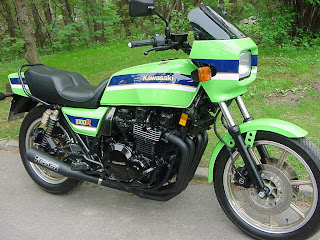
3. Kawasaki KZ1000R
I like the big Kawi fours, even if their braking and handling were terrifying. They were fast and that was the whole point. The KZ1000R stands out for me because it was the Eddie Lawson replica model. The regular KZ was modified with a Kerker four-into-one, sculpted seat, rear-set pegs, low bars and a nice bikini fairing. The engine was blacked out and the rest was splashed with Kawasaki green like Eddie's AMA superbike. A feature that stands out was factory remote reservoir rear shocks. Contemporary tests said they were rubbish but they were cool none the less.
4. Honda RC51
Honda built this to compete in World Superbike, where v-twins were allowed to be displaced up to 1,000cc. Honda had previously relied on their 750cc v-four. They won championships in the first two years of the series and then watched as Ducati marched to eight championships in 11 years with v-twins. It was only natural for them to go with what was winning. It worked as Honda won two more championships.
The 999cc twin had the usual fare: DOHC, four valves and two fuel injectors per cylinder. The frame was aluminum and there were trick components everywhere. What really does it for me is the break from tradition. Honda's big bad bikes were usually based around a four, either inline or vee. The v-twin sportbike was effectively Italy's territory. Honda proved they could make a v-twin that could not only compete with the dominating Ducatis but could also beat them.

5. Honda V-Fours
As the 80s were dawning, superbikes were running into a problem. As the engines kept getting bigger, they kept getting wider and heavier. Some moved their alternators behind the engine to save width but it wasn't enough. Honda solved these issues by switching from an inline four to a v-four. The result was a slimmer bike and with clever packaging, length wasn't affected. The new v-four was also liquid-cooled. The early VFs and VFRs marched onto the race track and did battle for a number of years as Honda's weapon of choice. When they started to be surpassed by lighter, faster bikes, Honda changed gears and rebranded the VFR as a sport-touring bike. The current VFR1200 carries on the tradition of innovation by offering a paddle-shift transmission, a first for a motorcycle.


6. Honda CBX
Before Honda got smart with the v-four, they went mad with the CBX. This bike was a monster featuring a 1,047cc inline six with 24 valves, six carbs and 105 bhp. It was an atomic bomb in a world of TNT. The bike was physically massive; the engine stuck out past the gas tank and was positioned front and center for optimal viewing. Well, with an engine that big, front and center was the only option. The CBX lasted only a few years and was eventually turned into a tourer before being dropped. As it was, the CBX was a perfect exclamation point for a decade of superbike excess.

7. Kawasaki GPz750 Turbo
The 80s were crazed for anything turbo: sunglasses, razors, cars, etc. Turbos were so popular the even GM built turbo cars. Naturally, the turbo craze made its way to motorcycles, too. Kawasaki released a few turbo Z1-Rs in the late 70s but they were pretty fierce and served really to highlight the Z1-R's numerous flaws. They struck back with the GPz750, which had an actual chassis designed for a powerful bike and brakes that worked. The GPz also shined against its competitors in classic Kawi style by being the fastest and most-powerful of the turbo bikes. It used a strengthened 750 engine with fuel injection that put out 113 bhp. Its competitors used carbs for their turbos and made less power as a result. The turbo era was short for motorcycles and this bike has sort of faded off in the annals of history. It's a shame, really.

8. Yamaha RZ350 (a.k.a. RD350 LC)
Smog laws had all but chased the two-strokes out of the American market by the late 70s. One holdout, though, was Yamaha, who brought a wicked little smoker back for two short years. The RZ350 was a miniscule bike that would terrorize the back roads and embarrass much bigger bikes through the magic of power-to-weight ratio. It wasn't as fast as a 900 Ninja but it carried none of the bulk, resulting in a scorching good time. The one to get is the Kenny Roberts edition in yellow and black with King Kenny's signature on the fairing.

9. Suzuki GT750
As the superbike arms race was heating up, each manufacturer was looking to create the next rocket. Instead of a giant inline four, Suzuki went with what it knew: two-strokes. They brought to the world a 739cc smoker with liquid-cooling and tons of chrome. Talk about being left field. What the Water Buffalo became was a legend, a middle finger to the four-stroke establishment. Suzuki pioneered by doing things their own way. Unfortunately, emissions laws and ever-quickening competition led to the Water Buffalo being replaced by the four-stroke GS fours. As such, this fire-breathing smoker's short life came to a quick end.

10. Yamaha V-Max
A lot of bikes are designed to be useful in many ways. Some can see work as commuters, weekend tourers and back road burners. Some can even be used for track days. The V-Max had none of this versatility in mind. It was built for one thing and one thing only: to go fast in a straight line. Cornering, braking and versatility were ignored.
This is a muscle bike in the purest sense. Basically, it's a big engine with a bike wrapped around it. Jay Gleason singed the drag strip on the way to a time in the low tens, faster than any other bike you could buy. The big 1,197cc v-four may have come from the Venture touring sofa but the similarities ended there. Power and compression was upped and the engine used a V-Boost system, which was a set of butterfly valves in the intake to ingest more air. The V-Max remained in production relatively unchanged from 1986 until 2008. The new VMAX debuted in 2009 with a 1,679cc v-four and 174 bhp. V-Boost returns only this time it's electrically controlled. The VMAX is still mad, bad and fast.


I'm also going to add two more bikes to my top 10 list, simply because I can:
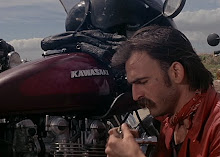
11. Goose's Kwaka from Mad Max
Mad Maxi is a movie full of cool cars and bikes but Goose's MFP Kwaka stands out to me. I like KZ1000s to begin with but the treatment given to this bike is excellent. The fairing and the paint scheme look great and the character of Goose tops it all off. I like to crank the volume when he goes tearing off down the road and lets the big four scream.

12. 1977 Suzuki GS550B
In all, this was a fairly normal bike. It, along with the GS750 were Suzuki's first four-strokes. Both were four-cylinders with DOHC and eight valves. The 550 had a six-speed trans, though. Why this bike is important to me was not that it was Suzuki's first four-stroke but that it was my first bike. I bought off the original owner for an extremely low price. It was in great shape and I genuinely miss it. My old Suzuki was a fantastic bike with its own quirks and personality. It had a Kerker four-into-one that made it sound like a GP bike at 9,000 rpm. I'll probably own another some day.

The problem is that conventional is boring. The mad Italian might only work occasionally and give you fits, but when it's working, it's very exciting. The Japanese bike will just work, all the time. That sort of reliability is nice but it doesn't do much for excitement.
Italian bikes also have the p-word: passion. The p-word is the sort of defense you use to justify extreme riding positions, wallet-searing costs of ownership and ridiculous maintenance procedures. The Japanese? Not so much. It's easy to look at the lineup of a Japanese manufacturer and see a range of bikes that look like they were stamped out of the same cookie sheet. Even the sport bikes look this way.
So, in summary, it seems Italian bikes are exciting and Japanese bikes are boring.
Not so fast, though.
While it may appear like the Japanese simply churn out cookie-cutter bikes for the masses, that isn't entirely accurate. Underneath the reliability, engineering and refinement is a great deal of passion. The Japanese can do exciting, and they can do it very well.
The two fastest production bikes in the world are Japanese. They have dominated the racing stage for nearly 40 years. They have brought racing technology to the street in a way never before seen. Exotic equipment like liquid-cooling, aluminum frames, overhead cams, disc brakes, four-cylinder engines, electronic fuel injection, turbocharging, anti-dive forks, mono-shock rear suspension, etc., etc. have been brought to the masses because of the Japanese.
What I'd like to do is present the top 10 Japanese bikes that move me in some way. By no means are these the top 10 best bikes to come from Japan. They are instead the 10 that I like best and would look best in my garage. They are in order, by the way.
1. Suzuki GS1000 Katana
I've written about the original Katana before and it has to be my all-time favorite Japanese bike. It's brutal, fast and uncompromising. I think its polarizing looks are fantastic and this bike paved the way for the modern sport bike as we know it.

2. Suzuki RG500 Gamma
The Gamma was a two-stroke street replica of the bike that won seven consecutive constructor's titles. The frame was aluminum, the front wheel was an 80s-chic 16 incher and the whole package was as big as a postage stamp. It weighed as much, too. Powering the monster was a 93 bhp square four, which was essentially two parallel twins chained together. I like it because it was pretty advanced for its day and it has its carbs on the side of the engine and a kick start,

3. Kawasaki KZ1000R
I like the big Kawi fours, even if their braking and handling were terrifying. They were fast and that was the whole point. The KZ1000R stands out for me because it was the Eddie Lawson replica model. The regular KZ was modified with a Kerker four-into-one, sculpted seat, rear-set pegs, low bars and a nice bikini fairing. The engine was blacked out and the rest was splashed with Kawasaki green like Eddie's AMA superbike. A feature that stands out was factory remote reservoir rear shocks. Contemporary tests said they were rubbish but they were cool none the less.

4. Honda RC51
Honda built this to compete in World Superbike, where v-twins were allowed to be displaced up to 1,000cc. Honda had previously relied on their 750cc v-four. They won championships in the first two years of the series and then watched as Ducati marched to eight championships in 11 years with v-twins. It was only natural for them to go with what was winning. It worked as Honda won two more championships.
The 999cc twin had the usual fare: DOHC, four valves and two fuel injectors per cylinder. The frame was aluminum and there were trick components everywhere. What really does it for me is the break from tradition. Honda's big bad bikes were usually based around a four, either inline or vee. The v-twin sportbike was effectively Italy's territory. Honda proved they could make a v-twin that could not only compete with the dominating Ducatis but could also beat them.

5. Honda V-Fours
As the 80s were dawning, superbikes were running into a problem. As the engines kept getting bigger, they kept getting wider and heavier. Some moved their alternators behind the engine to save width but it wasn't enough. Honda solved these issues by switching from an inline four to a v-four. The result was a slimmer bike and with clever packaging, length wasn't affected. The new v-four was also liquid-cooled. The early VFs and VFRs marched onto the race track and did battle for a number of years as Honda's weapon of choice. When they started to be surpassed by lighter, faster bikes, Honda changed gears and rebranded the VFR as a sport-touring bike. The current VFR1200 carries on the tradition of innovation by offering a paddle-shift transmission, a first for a motorcycle.


6. Honda CBX
Before Honda got smart with the v-four, they went mad with the CBX. This bike was a monster featuring a 1,047cc inline six with 24 valves, six carbs and 105 bhp. It was an atomic bomb in a world of TNT. The bike was physically massive; the engine stuck out past the gas tank and was positioned front and center for optimal viewing. Well, with an engine that big, front and center was the only option. The CBX lasted only a few years and was eventually turned into a tourer before being dropped. As it was, the CBX was a perfect exclamation point for a decade of superbike excess.

7. Kawasaki GPz750 Turbo
The 80s were crazed for anything turbo: sunglasses, razors, cars, etc. Turbos were so popular the even GM built turbo cars. Naturally, the turbo craze made its way to motorcycles, too. Kawasaki released a few turbo Z1-Rs in the late 70s but they were pretty fierce and served really to highlight the Z1-R's numerous flaws. They struck back with the GPz750, which had an actual chassis designed for a powerful bike and brakes that worked. The GPz also shined against its competitors in classic Kawi style by being the fastest and most-powerful of the turbo bikes. It used a strengthened 750 engine with fuel injection that put out 113 bhp. Its competitors used carbs for their turbos and made less power as a result. The turbo era was short for motorcycles and this bike has sort of faded off in the annals of history. It's a shame, really.

8. Yamaha RZ350 (a.k.a. RD350 LC)
Smog laws had all but chased the two-strokes out of the American market by the late 70s. One holdout, though, was Yamaha, who brought a wicked little smoker back for two short years. The RZ350 was a miniscule bike that would terrorize the back roads and embarrass much bigger bikes through the magic of power-to-weight ratio. It wasn't as fast as a 900 Ninja but it carried none of the bulk, resulting in a scorching good time. The one to get is the Kenny Roberts edition in yellow and black with King Kenny's signature on the fairing.

9. Suzuki GT750
As the superbike arms race was heating up, each manufacturer was looking to create the next rocket. Instead of a giant inline four, Suzuki went with what it knew: two-strokes. They brought to the world a 739cc smoker with liquid-cooling and tons of chrome. Talk about being left field. What the Water Buffalo became was a legend, a middle finger to the four-stroke establishment. Suzuki pioneered by doing things their own way. Unfortunately, emissions laws and ever-quickening competition led to the Water Buffalo being replaced by the four-stroke GS fours. As such, this fire-breathing smoker's short life came to a quick end.

10. Yamaha V-Max
A lot of bikes are designed to be useful in many ways. Some can see work as commuters, weekend tourers and back road burners. Some can even be used for track days. The V-Max had none of this versatility in mind. It was built for one thing and one thing only: to go fast in a straight line. Cornering, braking and versatility were ignored.
This is a muscle bike in the purest sense. Basically, it's a big engine with a bike wrapped around it. Jay Gleason singed the drag strip on the way to a time in the low tens, faster than any other bike you could buy. The big 1,197cc v-four may have come from the Venture touring sofa but the similarities ended there. Power and compression was upped and the engine used a V-Boost system, which was a set of butterfly valves in the intake to ingest more air. The V-Max remained in production relatively unchanged from 1986 until 2008. The new VMAX debuted in 2009 with a 1,679cc v-four and 174 bhp. V-Boost returns only this time it's electrically controlled. The VMAX is still mad, bad and fast.


I'm also going to add two more bikes to my top 10 list, simply because I can:
11. Goose's Kwaka from Mad Max
Mad Maxi is a movie full of cool cars and bikes but Goose's MFP Kwaka stands out to me. I like KZ1000s to begin with but the treatment given to this bike is excellent. The fairing and the paint scheme look great and the character of Goose tops it all off. I like to crank the volume when he goes tearing off down the road and lets the big four scream.

12. 1977 Suzuki GS550B
In all, this was a fairly normal bike. It, along with the GS750 were Suzuki's first four-strokes. Both were four-cylinders with DOHC and eight valves. The 550 had a six-speed trans, though. Why this bike is important to me was not that it was Suzuki's first four-stroke but that it was my first bike. I bought off the original owner for an extremely low price. It was in great shape and I genuinely miss it. My old Suzuki was a fantastic bike with its own quirks and personality. It had a Kerker four-into-one that made it sound like a GP bike at 9,000 rpm. I'll probably own another some day.

Monday, November 19, 2012
The Mad Men From Rimini
Way back in the 70s, when things like disco, Boston (the band) and brown were popular, a trio of engineers got together in a shed in the Italian coastal town of Rimini to make motorcycles better.
Boy, did they ever.
What resulted from their efforts were motorcycles that were mad, exotic and expensive. Everything was handmade to the highest specifications and no idea was too far-fetched. As with most interesting stories, there is beauty, strife and rebirth. This is not the story of an ordinary company that faced hard times. Most companies do. This is the story of another kind of company; a company built on ambitious engineering and big ideas.
This is the story of Bimota.
Bimota began in 1973 as the brainchild of three engineers: Valerio Bianchi, Guiseppe Morri and Massimo Tamburini. The combination of their three names gave birth to Bimota - Bianchi, Morri and Tamburini.
The company started out making frames for the ever more powerful motorcycles from Japan. Honda, Suzuki, Yamaha and Kawasaki were making big power from their four-cylinder engines but their frames were far behind in development. A combination of poor design and weak material led to interesting handling, especially in Kawasaki's case. Racing victories ensued, which helped launch Bimota's business. Frame kits were soon offered to the general public. Well, those who could afford them, anyway. Others such as Rickman and Harris from England and Fritz Egli from Switzerland had similar ideas.
What set Bimota apart was their willingness to take risks. While its competitors were going traditional routes, Bimota was doing things like placing the fuel tank lower in the frame and using monoshock rear suspension. This may sound quaint by today's standards but this was heady stuff back then.
In the 80s, however, the Japanese started to close in on the Italians in terms of handling. They were also applying the ideas learned from racing into their road bikes, so once exotic technology was starting to become commonplace. Justifying an exotic like a Bimota was becoming more difficult.
What Bimota needed was something to make them viable again; something to show the world they were still the leader in exotica. The first bit of help came in the form of the DB1, their first collaboration with Ducati. Both companies were in trouble at the time and both needed something new. Ducati's Pantah engine was surrounded by Bimota frame and then wrapped in all-enclosed bodywork. The DB1 provided the shot in the arm Bimota needed to stay afloat.
The second bit of help came in the form of Pierluigi Marconi's thesis.
The resulting machine was very similar to the then-current Bimotas. It had a trick frame and enclosed bodywork. It was also powered by a Ducati Pantah V-twin like the DB1. Its party piece was the subject of Marconi's thesis: hub-centric steering.
Instead of the usual hydraulic fork, the Tesi ( thesis in Italian) had a swinging arm in the front and one front damper. This front arm eliminated the flex in the front forks under braking. Another advantage was the lack of dive under braking. This gave the Tesi a huge amount of stability under braking, much more than with the traditional hydraulic fork.
Continuing into the 90s, Bimota kept to their history of putting exotic frames around production engines. In 1997, they released the V Due, their first bike completely built in house. The usually Bimota trick frame and top-shelf suspension were there but the V Due had something else that was new: Bimota's first engine.
This engine was a 499cc two-stroke V-twin with direct fuel injection designed to meet the new restrictive emissions standards. This advanced fuel injection took eight years to develop and was supposed to solve the emissions problems with two strokes. The V Due should have been a return to prominence for Bimota, who were becoming less and less relevant as regular production bikes got better.
Instead, the bike turned out to be hugely flawed. The fuel injection system worked so poorly that some considered the bike to be "born bad." Irate owners of the expensive V Due demanded that Bimota fix the problem but the company could never get the bike to run right. Bimota ended up recalling all 340 V Dues produced.
While this was going on, one of their major racing sponsors backed out, leaving a huge amount of debt owned to Bimota. These two coinciding events plunged the already struggling company into bankruptcy. The shop in Rimini that set out to change motorcycles for the better was now closed.
All was not lost, however. In 2003, a group of investors bought Bimota and pumped some much-needed cash into the company. As a result, Bimota returned to the scene in 2005 with a range of bikes powered by Suzuki and Ducati engines. The Tesi came back, too, with a new Ducati powerplant and an updated hub-centric front end.
What's the reason behind this history lesson, you ask? The group of new Bimotas recently released is what spurred this post. Ten years ago the company was dead and now they're releasing a motard (DB10), a Ducati-powered off roader (DBx), and a new superbike based around the drivetrain from the BMW S1000RR (BB2). In a new direction, Bimota is even releasing a sport-touring bike, the DB12. This model is the first Bimota to have a passenger seat. They've also again tried their hand at building a two-stroke engine in-house. The BBx dirt bike is powered by a 300cc two-stroke single.
Don't think they've gone soft, though. The new DB11 VLX has the engine from a Ducati 1198 between its trick frame rails. And before you think it's just some exotic bits thrown on a production engine, it has a unique engine management and exhaust system. Oh, and it has one more thing: a twin-screw supercharger. With the blower between the cylinders, power goes up to 190 bhp.
No one knows how long Bimota will be around this time but the future looks bright for the mad men from Rimini. Bimotas, especially the Tesi, have always struck a chord with me because of their exotic nature and their willingness to take risks. I like a company that's willing to put good sense aside and do what others won't. I hope Bimota stays around for a long time and they continue to be mad, exotic and expensive.
Boy, did they ever.
What resulted from their efforts were motorcycles that were mad, exotic and expensive. Everything was handmade to the highest specifications and no idea was too far-fetched. As with most interesting stories, there is beauty, strife and rebirth. This is not the story of an ordinary company that faced hard times. Most companies do. This is the story of another kind of company; a company built on ambitious engineering and big ideas.
This is the story of Bimota.
Bimota began in 1973 as the brainchild of three engineers: Valerio Bianchi, Guiseppe Morri and Massimo Tamburini. The combination of their three names gave birth to Bimota - Bianchi, Morri and Tamburini.
The company started out making frames for the ever more powerful motorcycles from Japan. Honda, Suzuki, Yamaha and Kawasaki were making big power from their four-cylinder engines but their frames were far behind in development. A combination of poor design and weak material led to interesting handling, especially in Kawasaki's case. Racing victories ensued, which helped launch Bimota's business. Frame kits were soon offered to the general public. Well, those who could afford them, anyway. Others such as Rickman and Harris from England and Fritz Egli from Switzerland had similar ideas.
What set Bimota apart was their willingness to take risks. While its competitors were going traditional routes, Bimota was doing things like placing the fuel tank lower in the frame and using monoshock rear suspension. This may sound quaint by today's standards but this was heady stuff back then.
In the 80s, however, the Japanese started to close in on the Italians in terms of handling. They were also applying the ideas learned from racing into their road bikes, so once exotic technology was starting to become commonplace. Justifying an exotic like a Bimota was becoming more difficult.
What Bimota needed was something to make them viable again; something to show the world they were still the leader in exotica. The first bit of help came in the form of the DB1, their first collaboration with Ducati. Both companies were in trouble at the time and both needed something new. Ducati's Pantah engine was surrounded by Bimota frame and then wrapped in all-enclosed bodywork. The DB1 provided the shot in the arm Bimota needed to stay afloat.
The second bit of help came in the form of Pierluigi Marconi's thesis.
The resulting machine was very similar to the then-current Bimotas. It had a trick frame and enclosed bodywork. It was also powered by a Ducati Pantah V-twin like the DB1. Its party piece was the subject of Marconi's thesis: hub-centric steering.
Instead of the usual hydraulic fork, the Tesi ( thesis in Italian) had a swinging arm in the front and one front damper. This front arm eliminated the flex in the front forks under braking. Another advantage was the lack of dive under braking. This gave the Tesi a huge amount of stability under braking, much more than with the traditional hydraulic fork.
Continuing into the 90s, Bimota kept to their history of putting exotic frames around production engines. In 1997, they released the V Due, their first bike completely built in house. The usually Bimota trick frame and top-shelf suspension were there but the V Due had something else that was new: Bimota's first engine.
This engine was a 499cc two-stroke V-twin with direct fuel injection designed to meet the new restrictive emissions standards. This advanced fuel injection took eight years to develop and was supposed to solve the emissions problems with two strokes. The V Due should have been a return to prominence for Bimota, who were becoming less and less relevant as regular production bikes got better.
Instead, the bike turned out to be hugely flawed. The fuel injection system worked so poorly that some considered the bike to be "born bad." Irate owners of the expensive V Due demanded that Bimota fix the problem but the company could never get the bike to run right. Bimota ended up recalling all 340 V Dues produced.
While this was going on, one of their major racing sponsors backed out, leaving a huge amount of debt owned to Bimota. These two coinciding events plunged the already struggling company into bankruptcy. The shop in Rimini that set out to change motorcycles for the better was now closed.
All was not lost, however. In 2003, a group of investors bought Bimota and pumped some much-needed cash into the company. As a result, Bimota returned to the scene in 2005 with a range of bikes powered by Suzuki and Ducati engines. The Tesi came back, too, with a new Ducati powerplant and an updated hub-centric front end.
What's the reason behind this history lesson, you ask? The group of new Bimotas recently released is what spurred this post. Ten years ago the company was dead and now they're releasing a motard (DB10), a Ducati-powered off roader (DBx), and a new superbike based around the drivetrain from the BMW S1000RR (BB2). In a new direction, Bimota is even releasing a sport-touring bike, the DB12. This model is the first Bimota to have a passenger seat. They've also again tried their hand at building a two-stroke engine in-house. The BBx dirt bike is powered by a 300cc two-stroke single.
Don't think they've gone soft, though. The new DB11 VLX has the engine from a Ducati 1198 between its trick frame rails. And before you think it's just some exotic bits thrown on a production engine, it has a unique engine management and exhaust system. Oh, and it has one more thing: a twin-screw supercharger. With the blower between the cylinders, power goes up to 190 bhp.
No one knows how long Bimota will be around this time but the future looks bright for the mad men from Rimini. Bimotas, especially the Tesi, have always struck a chord with me because of their exotic nature and their willingness to take risks. I like a company that's willing to put good sense aside and do what others won't. I hope Bimota stays around for a long time and they continue to be mad, exotic and expensive.
Monday, November 5, 2012
Close the Lights
Well, the first full week of November is upon us and that means the riding season is officially over for me. The lows are starting to dip into the 20s; that's too cold for me. This weekend I removed the batteries from the bikes and put them on a shelf in the basement.
Looking back, I'd say this past riding season was a good one. I didn't go on any long trips, though I planned probably a hundred of them. Dreaming up trips on Google Maps is a great way to kill an hour or so. Anyway, I took a few day trips but nothing major this year.
With that said, I managed to put a record number of miles on the bikes this year. I put about 5,000 combined miles on both bikes (hold your applause, please), which is the most I've ever put on in one season. The reason for this were the weekend jaunts I took to forget about the week.
You see, I finally joined the 21st century and got an iPhone. I hated it at first and felt like a total sellout. I had vowed never to spend money on a cell phone and always took the free phone. My stance wasn't based on me being cheap (well, not 100 percent, anyway) but on principle. I dislike phones heavily, especially the talking part, and used mine as little as possible. I thought the iPhone and other smart phones were completely ridiculous.
My stance on the iPhone changed when I realized it came loaded with Google Maps, the aforementioned waster of hours noted above. This meant, my brain told me, that I would have a map on me while I was riding. It also meant that I wouldn't have to fumble about with a folded map or have to guess my exact location. Hmm...
This new-found appreciation for technology gave me increased confidence to go and get lost. For me, the issue with getting lost on purpose is my lack of a sense of direction. I get lost way too easily, which leads to me losing my temper and getting even more lost, which then leads to me panicking. It's a vicious cycle. Even using GPS didn't prevent me from getting lost.
Now I can get as lost as I dare and have my magic phone bail me out. That is the kind of technology I like.
With magic phone in tow, I made it a point nearly every weekend to get lost. What resulted was a honing of my directional skills and the discovery of some great new roads. I was missing out on some great tarmac because I clung to the few routes I knew, most of which weren't really that good.
I feel like an idiot for raving about a cell phone on a site that's supposed to be about motorcycling. The truth is, though, that it's a pretty handy device for a motorcyclist. I can find good roads on-the-fly, get weather updates and find new destinations. I'm quite enamored with the thing, to be honest, which explains this crap post.
I still don't like talking on the phone, though.
Looking back, I'd say this past riding season was a good one. I didn't go on any long trips, though I planned probably a hundred of them. Dreaming up trips on Google Maps is a great way to kill an hour or so. Anyway, I took a few day trips but nothing major this year.
With that said, I managed to put a record number of miles on the bikes this year. I put about 5,000 combined miles on both bikes (hold your applause, please), which is the most I've ever put on in one season. The reason for this were the weekend jaunts I took to forget about the week.
You see, I finally joined the 21st century and got an iPhone. I hated it at first and felt like a total sellout. I had vowed never to spend money on a cell phone and always took the free phone. My stance wasn't based on me being cheap (well, not 100 percent, anyway) but on principle. I dislike phones heavily, especially the talking part, and used mine as little as possible. I thought the iPhone and other smart phones were completely ridiculous.
My stance on the iPhone changed when I realized it came loaded with Google Maps, the aforementioned waster of hours noted above. This meant, my brain told me, that I would have a map on me while I was riding. It also meant that I wouldn't have to fumble about with a folded map or have to guess my exact location. Hmm...
This new-found appreciation for technology gave me increased confidence to go and get lost. For me, the issue with getting lost on purpose is my lack of a sense of direction. I get lost way too easily, which leads to me losing my temper and getting even more lost, which then leads to me panicking. It's a vicious cycle. Even using GPS didn't prevent me from getting lost.
Now I can get as lost as I dare and have my magic phone bail me out. That is the kind of technology I like.
With magic phone in tow, I made it a point nearly every weekend to get lost. What resulted was a honing of my directional skills and the discovery of some great new roads. I was missing out on some great tarmac because I clung to the few routes I knew, most of which weren't really that good.
I feel like an idiot for raving about a cell phone on a site that's supposed to be about motorcycling. The truth is, though, that it's a pretty handy device for a motorcyclist. I can find good roads on-the-fly, get weather updates and find new destinations. I'm quite enamored with the thing, to be honest, which explains this crap post.
I still don't like talking on the phone, though.
Subscribe to:
Posts (Atom)