I was flipping through the latest issue of Cycle World with my usual apathy toward its content when I stumbled upon Kevin Cameron's list of the Five Greatest Motorcycles. It's an interesting list of influential and great motorcycles. Unfortunately, it's wrong.
You see, Cameron might be a big, fancy pro writer with an office and a few books under his belt but my opinion is more correct. Since my opinion is more correct, here are the Five Greatest Motorcycles:
1. Moto Guzzi V8 - It was extremely fast, extremely light, extremely complex and extremely dangerous. It even tried to kill Bill Lomas. In other words, it was totally awesome.
2. Laverda Jota 180 - It vibrated like mad but delivered sonorous noise and tight handling. It also went 140 mph when nothing else did and came in orange, which is a great color.
3. Triumph 6T Thunderbird - Marlon Brando rode one and was the coolest thing to happen to the '50s since the Appalachian Blizzard of 1950. He later sold it and became fat, old and weird. Coincidence?
4. Ducati 916 - This gorgeous machine brought Ducati four Superbike World Championships and made Carl Fogarty a household name. If Monet's Water Lilies were a motorcycle, they would be the 916.
5. BMW R90S - BMW set out to build a superbike and promptly won the inaugural AMA Superbike Championship championship. It also proved that giant Dell'ortos and poor charging systems weren't the sole property of Italian bikes.
And since Cameron included a sixth bike, I will, too. Here it is:
6. Bimota Tesi 1D, 2D & 3D - The Tesi was the future here now. It was to be the end of the spindly front fork the motorcycle has been stuck with since the dawn of time. Unfortunately, like most things that are cutting edge, the Tesi was expensive, complex and a poor seller. The traditional hydraulic front fork looks like it's here to stay in all its terrible glory.
Tuesday, January 3, 2012

Saturday, December 31, 2011
American by Name, Italian by Soul
If I asked you to guess the 70's four-cylinder bike I'm thinking of with 750 in its name, I can guarantee you'd say Honda CB750.
And you'd be wrong.
I'm thinking of something much more exotic. In fact, I'm thinking of something that cost almost twice as much when new than a CB750. It was an aristocrat's four-cylinder superbike, one dripping with racetrack engineering, pedigree and hardware.
I'm thinking of the MV Agusta 750S America.
The 750S America was an evolution of the stunning 750S, Count Agusta's race bike for the street. Except that it wasn't a race bike. Agusta was terrified of privateers buying the 750S, entering races and then losing, thus tarnishing the mighty MV Agusta name. To prevent this from happening, Agusta ordered the 787cc four to be neutered.
The cylinder head was filled with tiny valves, the engine was fed by tiny carbs, and the final drive was done via a shaft. Cheap rear shocks and a poor front drum brake were also added. What resulted was an overly expensive bike that would get beaten by the much-cheaper CB750 and absolutely slaughtered by the Kawasaki Z1.
To remedy this, MV went back to the shed and set out to give the 750S the performance it demanded.
First, the heavy front drum was replaced by twin discs. Next the engine was given a refresh. The tiny Dell'orto UB24 carbs were replaced by larger Dell'orto VHBs. Finally, the valves grew and so did the compression. What resulted was a bump in power from 66 hp to 75 hp and a 9,000 rpm redline. These changes allowed the 750 to finally reach its advertised 130 mph top speed. The shaft final drive and heavy weight remained but the bike had an overall more visceral feel to it.
Performance wasn't the only thing that was updated. To accentuate the new found power, MV gave the bike's styling a refresh. The rounded tank was replaced by a longer unit with more squared-off styling and large cutouts for the rider's knees. The classic bum-stop seat of the 750S was replaced with a square stop seat covered in brown suede. Nothing says 1970's chic like brown suede.
Over the next few years, the 750S America was treated to a number of changes. The spoked wheels were replaced by cast wheels and the silencers were redesigned. The four was eventually bored out to 837cc, which meant more power and more speed.
The MV 750 really came into its own at the hands of tuner Arturo Magni. Magni replaced the suspension with top-quality units and put the bike on a massive diet. The shaft drive was also tossed in favor of a chain. Magni's hands also found their way into the engine, which saw displacement rise to 861cc and power rise to 92 hp.
The plummeting weight and increasing power meant the 750 was getting closer to the street-legal race bike it should have been. Through continued evolution at the hands of the factory and tuning shops, the 750 was displacing 1,066cc and belting out 118 hp by the end of production in 1980.
So, then, it's hard to sum up the 750 and what makes it so special. It definitely was a uniquely Italian answer to the superbike question. At first glance, it seems to be a beautiful piece of Italian sculpture bolted to an industrial lump of sand cast aluminum. On paper, it was heavy, expensive and complex. In reality, it was heavy, expensive and complex. It was also a bit slow at first but that was quickly remedied.
So what is it? What is the MV 750?
I can tell you in one word: timeless.
The MV 750 is timeless in that it was totally exotic, totally different from every other motorcycle out there. It was very expensive and sold in minuscule numbers, quite in contrast to the cheap and hugely popular fours from Japan. And while the fours from Japan were raced, destroyed, ruined, chopped and thrown away, the MVs were kept and appreciated. These days, the fours that could run over the MV 750 are practically given away while the MV silently increases in value.
To sum it up, the MV 750 is as all great art is: a curious oddity when new and then a cherished piece when its time has passed.
And you'd be wrong.
I'm thinking of something much more exotic. In fact, I'm thinking of something that cost almost twice as much when new than a CB750. It was an aristocrat's four-cylinder superbike, one dripping with racetrack engineering, pedigree and hardware.
I'm thinking of the MV Agusta 750S America.
The 750S America was an evolution of the stunning 750S, Count Agusta's race bike for the street. Except that it wasn't a race bike. Agusta was terrified of privateers buying the 750S, entering races and then losing, thus tarnishing the mighty MV Agusta name. To prevent this from happening, Agusta ordered the 787cc four to be neutered.
The cylinder head was filled with tiny valves, the engine was fed by tiny carbs, and the final drive was done via a shaft. Cheap rear shocks and a poor front drum brake were also added. What resulted was an overly expensive bike that would get beaten by the much-cheaper CB750 and absolutely slaughtered by the Kawasaki Z1.
To remedy this, MV went back to the shed and set out to give the 750S the performance it demanded.
First, the heavy front drum was replaced by twin discs. Next the engine was given a refresh. The tiny Dell'orto UB24 carbs were replaced by larger Dell'orto VHBs. Finally, the valves grew and so did the compression. What resulted was a bump in power from 66 hp to 75 hp and a 9,000 rpm redline. These changes allowed the 750 to finally reach its advertised 130 mph top speed. The shaft final drive and heavy weight remained but the bike had an overall more visceral feel to it.
Performance wasn't the only thing that was updated. To accentuate the new found power, MV gave the bike's styling a refresh. The rounded tank was replaced by a longer unit with more squared-off styling and large cutouts for the rider's knees. The classic bum-stop seat of the 750S was replaced with a square stop seat covered in brown suede. Nothing says 1970's chic like brown suede.
Over the next few years, the 750S America was treated to a number of changes. The spoked wheels were replaced by cast wheels and the silencers were redesigned. The four was eventually bored out to 837cc, which meant more power and more speed.
The MV 750 really came into its own at the hands of tuner Arturo Magni. Magni replaced the suspension with top-quality units and put the bike on a massive diet. The shaft drive was also tossed in favor of a chain. Magni's hands also found their way into the engine, which saw displacement rise to 861cc and power rise to 92 hp.
The plummeting weight and increasing power meant the 750 was getting closer to the street-legal race bike it should have been. Through continued evolution at the hands of the factory and tuning shops, the 750 was displacing 1,066cc and belting out 118 hp by the end of production in 1980.
So, then, it's hard to sum up the 750 and what makes it so special. It definitely was a uniquely Italian answer to the superbike question. At first glance, it seems to be a beautiful piece of Italian sculpture bolted to an industrial lump of sand cast aluminum. On paper, it was heavy, expensive and complex. In reality, it was heavy, expensive and complex. It was also a bit slow at first but that was quickly remedied.
So what is it? What is the MV 750?
I can tell you in one word: timeless.
The MV 750 is timeless in that it was totally exotic, totally different from every other motorcycle out there. It was very expensive and sold in minuscule numbers, quite in contrast to the cheap and hugely popular fours from Japan. And while the fours from Japan were raced, destroyed, ruined, chopped and thrown away, the MVs were kept and appreciated. These days, the fours that could run over the MV 750 are practically given away while the MV silently increases in value.
To sum it up, the MV 750 is as all great art is: a curious oddity when new and then a cherished piece when its time has passed.
Sunday, December 18, 2011
Ducati Updates - Part Deux
Since I picked up my Ducati's cylinder head this weekend, I thought I'd share some pics of it with my non-existent readers.
Right; let's start the show:
 As you can see, the head was cleaned and sandblasted. New guides, valves and seats were also fitted to the head. The spark plug hole was cleaned and Heli-coiled because only half of the old threads remained.
 Here's the new guide on the exhaust side...
 ...And here is the new guide on the intake side.
 Here you can see the other ends of the new guides and the new valve seats. They look fantastic.
 Here's the newly-repaired spark plug hole.
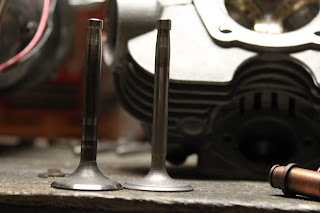
 Here are the new valves. The one on the left is the intake and it's 36mm while the one on the right is the exhaust and it's 33mm.
 Here are the old valves and the old guides. The rockers were hitting the old valves on an angle, wiping out the guides.
The old valves were quite a bit longer than the new valves, as evidenced here:
And here:
 The height differences were remedied with lash caps, which are little hardened caps that fit over the tops of the valves, making up the differences in height.
I think the head turned out wonderfully. I'm happy with the work and I'd like to give a big thank you to Dave at Dutchman Racing who did the work.
Right; let's start the show:


The old valves were quite a bit longer than the new valves, as evidenced here:

And here:

I think the head turned out wonderfully. I'm happy with the work and I'd like to give a big thank you to Dave at Dutchman Racing who did the work.
Monday, December 12, 2011
Ducati Updates
In the past few months, work on my old rusty Ducati has been few and far between. It's not that I've lost interest in it, I've just been riding my bikes that actually work.
But all has not been lost in that time. I've decided to make the bike look like a proper 1965 Ducati 350 should look. I have the complete bodywork for a 1966, with its squared-off tank, fenders and headlamp but it just wasn't right. The '65 350 Sebring shared its bodywork with the 160 Monza Junior and that was the only year the Sebring had the rounded tank. Being that it was a one-year-only deal, I think it would only be right to make it look correct. Besides, the 1966 bodywork is really ugly and the proper 1965 bodywork is much better-looking.
So that meant finding this bodywork. Scouring Ebay for weeks turned up nothing. Scouring other parts of the Internet also turned up nothing. Clearly, this was not going to be easy.
But then, by chance, the right tank popped up on Ebay. After an intense bidding war that resulted in me overpaying by quite a lot, the tank I needed was mine. It's not an actual Sebring tank but an older Monza Junior tank that has black painted over chrome. The chrome stripes were not only incorrectly lined up (famous Italian build quality) but were quite rusty. Thankfully, the rust was only on the surface and was gone after an hour or so of rubbing with aluminum foil and steel wool.
The rest of the tank is in good shape, too. The inside is very clean and there only minor imperfections on the outside. The gas cap is also in good condition, thereby saving me money.
I think it was a good purchase but it leaves with a decision to make. See, I like the chrome, even if it's dull and slightly pitted. Since the bike will never be a concourse restoration, I'd like to leave the tank as it sits, making the bike look like a survivor instead of a 100-point resto. But the other half of me wants to paint it and make it look new. Fortunately, I have a million other decisions to make regarding the bike so paint choice isn't pressing at the moment.
Also new in the past few months is a bunch of stuff for the cylinder head. After I took it apart, I got a good look at the valve seats and they were knackered, to borrow a phrase. It seems years of sitting while being exposed to the elements caused the seats to corrode. Who knew?
Anyway, I don't have the knowledge nor equipment to deal with installing new valve seats, so the head went off to a machine shop. From the machine shop, more bad news rolled in. It seems the valves were cracked and the guides were severely worn. The rocker arms were hitting the valves off-center and causing the valves to open on an angle, wiping out the guides. Lovely. I ordered new valves, guides and seats and they, too, went to the machine shop.
After a few weeks of work, I should be picking the head up this weekend. With the cylinder head sorted, I can finish boring the cylinder liner to fit the new 76.6mm piston and then bolt the engine back together. All I need now for the powertrain are steel and fiber plates for the clutch, a point and condenser and a spark plug. Once the engine is finished, I can move on to the wheels, tires, brakes, suspension and bodywork.
In all, my rusty Ducati is coming along and my goal of it being roadworthy before the December 21, 2012 apocalypse is within sight.
But all has not been lost in that time. I've decided to make the bike look like a proper 1965 Ducati 350 should look. I have the complete bodywork for a 1966, with its squared-off tank, fenders and headlamp but it just wasn't right. The '65 350 Sebring shared its bodywork with the 160 Monza Junior and that was the only year the Sebring had the rounded tank. Being that it was a one-year-only deal, I think it would only be right to make it look correct. Besides, the 1966 bodywork is really ugly and the proper 1965 bodywork is much better-looking.
So that meant finding this bodywork. Scouring Ebay for weeks turned up nothing. Scouring other parts of the Internet also turned up nothing. Clearly, this was not going to be easy.
But then, by chance, the right tank popped up on Ebay. After an intense bidding war that resulted in me overpaying by quite a lot, the tank I needed was mine. It's not an actual Sebring tank but an older Monza Junior tank that has black painted over chrome. The chrome stripes were not only incorrectly lined up (famous Italian build quality) but were quite rusty. Thankfully, the rust was only on the surface and was gone after an hour or so of rubbing with aluminum foil and steel wool.
The rest of the tank is in good shape, too. The inside is very clean and there only minor imperfections on the outside. The gas cap is also in good condition, thereby saving me money.
I think it was a good purchase but it leaves with a decision to make. See, I like the chrome, even if it's dull and slightly pitted. Since the bike will never be a concourse restoration, I'd like to leave the tank as it sits, making the bike look like a survivor instead of a 100-point resto. But the other half of me wants to paint it and make it look new. Fortunately, I have a million other decisions to make regarding the bike so paint choice isn't pressing at the moment.
Also new in the past few months is a bunch of stuff for the cylinder head. After I took it apart, I got a good look at the valve seats and they were knackered, to borrow a phrase. It seems years of sitting while being exposed to the elements caused the seats to corrode. Who knew?
Anyway, I don't have the knowledge nor equipment to deal with installing new valve seats, so the head went off to a machine shop. From the machine shop, more bad news rolled in. It seems the valves were cracked and the guides were severely worn. The rocker arms were hitting the valves off-center and causing the valves to open on an angle, wiping out the guides. Lovely. I ordered new valves, guides and seats and they, too, went to the machine shop.
After a few weeks of work, I should be picking the head up this weekend. With the cylinder head sorted, I can finish boring the cylinder liner to fit the new 76.6mm piston and then bolt the engine back together. All I need now for the powertrain are steel and fiber plates for the clutch, a point and condenser and a spark plug. Once the engine is finished, I can move on to the wheels, tires, brakes, suspension and bodywork.
In all, my rusty Ducati is coming along and my goal of it being roadworthy before the December 21, 2012 apocalypse is within sight.
Sunday, November 20, 2011
The Difference
With cloudy skies overhead and a temperature hovering around 60, I threw a leg over my Bonneville for a little bit of Fall riding. This Fall has been uncharacteristically warm, which means I can put off the end of the riding season. No complaints from me, I assure you.
As I was riding along admiring the thinning fall foliage, I began to think about the differences between one motorcycle and the next. You see, I've been riding my Guzzi a lot for the past few weeks, mostly because its battery is easier to install. During that time, I became used to its awkward riding position, heavy weight and prodigious power. While going along on my Bonneville today, everything was different.
For starters, the Bonneville feels like a lithe top-line center compared to the gruff defenseman feel of the Guzzi. It does this despite only being 30 lbs lighter. The Bonneville tracks along wonderfully, requiring only the slightest nudge of the handlebars to change direction. It's an easy bike to ride at any speed. On the Guzzi, you get the feeling that it's bored riding at normal speeds. I can hear the Guzzi saying to me: "faster, faster, faster."
Then there's the riding position. On the Guzzi, you're in that racy, torturous Italian riding position. The Bonneville's position is the classic standard position. With the addition of the Thruxton gel seat, this bike is a comfortable long-distance mount. The Guzzi is better on the highway, though. I get the feeling the Guzzi wants to cruise all day at 100 mph. I get the feeling that I'm pushing the Bonneville a bit at speeds over 70.
What I'm getting at is that there are more differences going from bike to bike than from car to car. I drive a lot of cars at my job and I can say that a lot of them feel the same. A lot of the steering, braking and handling has the same feel regardless of brand.
That's not to say you won't feel a bit of difference going from a Volkswagen Golf to a Ferrari 599; of course you will. If you drive multiple mid-size cars or multiple pickup trucks, though, you'll get the feeling that they were all built from some sort of mold. It's like there's a template that says a compact car should feel like this, or that a full-size luxury car should feel like this. It kind of takes the fun out of driving. I think cars are starting to look the same, too.
I've owned and ridden numerous bikes and I can say they've all felt different. A Harley feels different than a BMW, which feels different from a Yamaha. Each bike manufacturer does things their own way and that is evidenced in their products. It makes for interesting products and gives each bike its own character. Each new bike you ride is a new experience. It's not like going from car to car, where you adjust the seat and the mirrors and drive off.
Going from bike to bike, you have to learn the nuances of the new bike. You have to learn what it likes and what it doesn't like. Cars have been engineered to adapt to you. Many cars have memory seats to adapt to your size and have transmissions that adapt to your driving style. You don't get that on a bike. It's up to you to adapt to the bike. It's like going to bed with someone new. It's a bit rocky at first while you each figure out what the other person likes and doesn't like. Once you find it, the magic happens. Sometimes the magic happens too quickly but never mind that.
The differences between each bike is yet another reason why motorcycling is so interesting and so much fun. It's just a shame there isn't more time to sample the differences between bikes. Such is life.
As I was riding along admiring the thinning fall foliage, I began to think about the differences between one motorcycle and the next. You see, I've been riding my Guzzi a lot for the past few weeks, mostly because its battery is easier to install. During that time, I became used to its awkward riding position, heavy weight and prodigious power. While going along on my Bonneville today, everything was different.
For starters, the Bonneville feels like a lithe top-line center compared to the gruff defenseman feel of the Guzzi. It does this despite only being 30 lbs lighter. The Bonneville tracks along wonderfully, requiring only the slightest nudge of the handlebars to change direction. It's an easy bike to ride at any speed. On the Guzzi, you get the feeling that it's bored riding at normal speeds. I can hear the Guzzi saying to me: "faster, faster, faster."
Then there's the riding position. On the Guzzi, you're in that racy, torturous Italian riding position. The Bonneville's position is the classic standard position. With the addition of the Thruxton gel seat, this bike is a comfortable long-distance mount. The Guzzi is better on the highway, though. I get the feeling the Guzzi wants to cruise all day at 100 mph. I get the feeling that I'm pushing the Bonneville a bit at speeds over 70.
What I'm getting at is that there are more differences going from bike to bike than from car to car. I drive a lot of cars at my job and I can say that a lot of them feel the same. A lot of the steering, braking and handling has the same feel regardless of brand.
That's not to say you won't feel a bit of difference going from a Volkswagen Golf to a Ferrari 599; of course you will. If you drive multiple mid-size cars or multiple pickup trucks, though, you'll get the feeling that they were all built from some sort of mold. It's like there's a template that says a compact car should feel like this, or that a full-size luxury car should feel like this. It kind of takes the fun out of driving. I think cars are starting to look the same, too.
I've owned and ridden numerous bikes and I can say they've all felt different. A Harley feels different than a BMW, which feels different from a Yamaha. Each bike manufacturer does things their own way and that is evidenced in their products. It makes for interesting products and gives each bike its own character. Each new bike you ride is a new experience. It's not like going from car to car, where you adjust the seat and the mirrors and drive off.
Going from bike to bike, you have to learn the nuances of the new bike. You have to learn what it likes and what it doesn't like. Cars have been engineered to adapt to you. Many cars have memory seats to adapt to your size and have transmissions that adapt to your driving style. You don't get that on a bike. It's up to you to adapt to the bike. It's like going to bed with someone new. It's a bit rocky at first while you each figure out what the other person likes and doesn't like. Once you find it, the magic happens. Sometimes the magic happens too quickly but never mind that.
The differences between each bike is yet another reason why motorcycling is so interesting and so much fun. It's just a shame there isn't more time to sample the differences between bikes. Such is life.
Friday, November 18, 2011
It's a Great Time to Ride Italian
Motorcycling's cup has runneth over with Italian bikes at the Milan International Motorcycle Show. Bimota released a bunch of new bikes, Ducati debuted some new bikes including the 1199 Panigale and Moto Guzzi revamped the V7 line for 2012. This is great news for Italophiles everywhere.
 First up from Bimota is the DB10 Bimotard based on the Ducati Hypermotard. The air-cooled Ducati L-Twin remains and it bears a vague resemblance to the Hypermotard. The similarities end there. It's awash in carbon fiber and has a hand-formed trellis frame holding the bike together. Fully-adjustable suspension is standard, naturally, and it consists of 50mm Marzocchi forks up front and an Extreme Tech shock out back. There are also giant radial Brembos to make sure you stop before you hiy whatever you're screaming toward. Bimota claims a dry weight of 369 lbs, 10 pounds less than the standard Hypermotard.
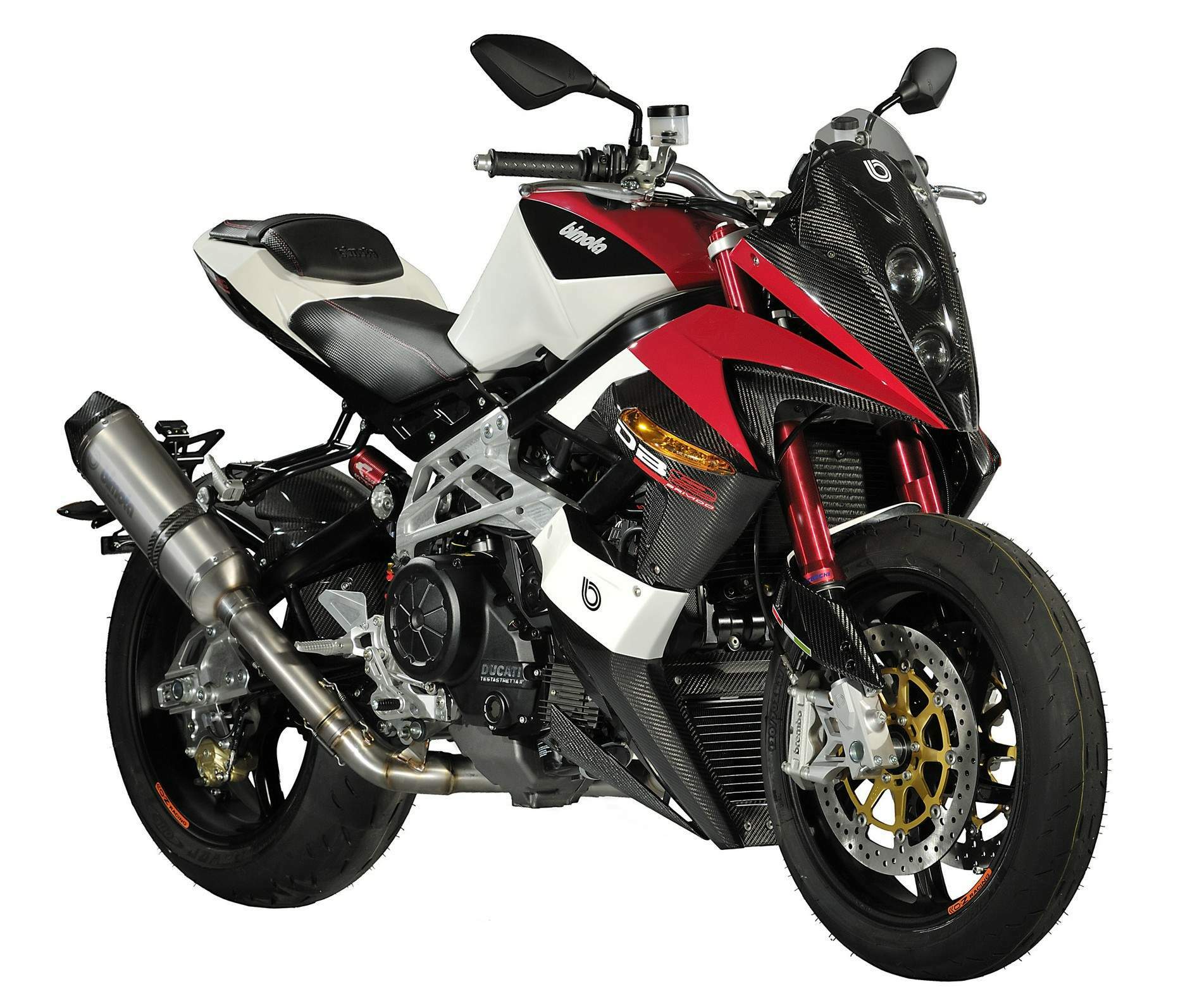
Bimota's entry into the naked bike segment is the DB9 Brivido, based upon the Ducati Streetfighter. This model is also awash in carbon fiber but is built around the liquid-cooled 1198cc twin that blasts out 162 hp. Yes, it has fully-adjustable suspension from Marzocchi and Extreme Tech but this time the front forks are 43mm, compared to the 50mm forks on the Bimotard. Stopping all this carbon fiber are the same big Brembos but this time they're bolted to lightweight wheels from O.Z.
 If you were expecting another Ducati-based Bimota, you're in for a disappointment. The final new Bimota released is a dirt bike called the BBX300. It has the hand-formed chassis you'd expect from Bimota but it has something you didn't: a two-stroke engine built in-house. Normally, Bimota builds their bikes around the engines of other manufacturers. Bimota tried their hand at building a two-stroke in-house with the V Due back in the 90s. The bike was a mess and never really worked properly. Let's hope the new engine works out.
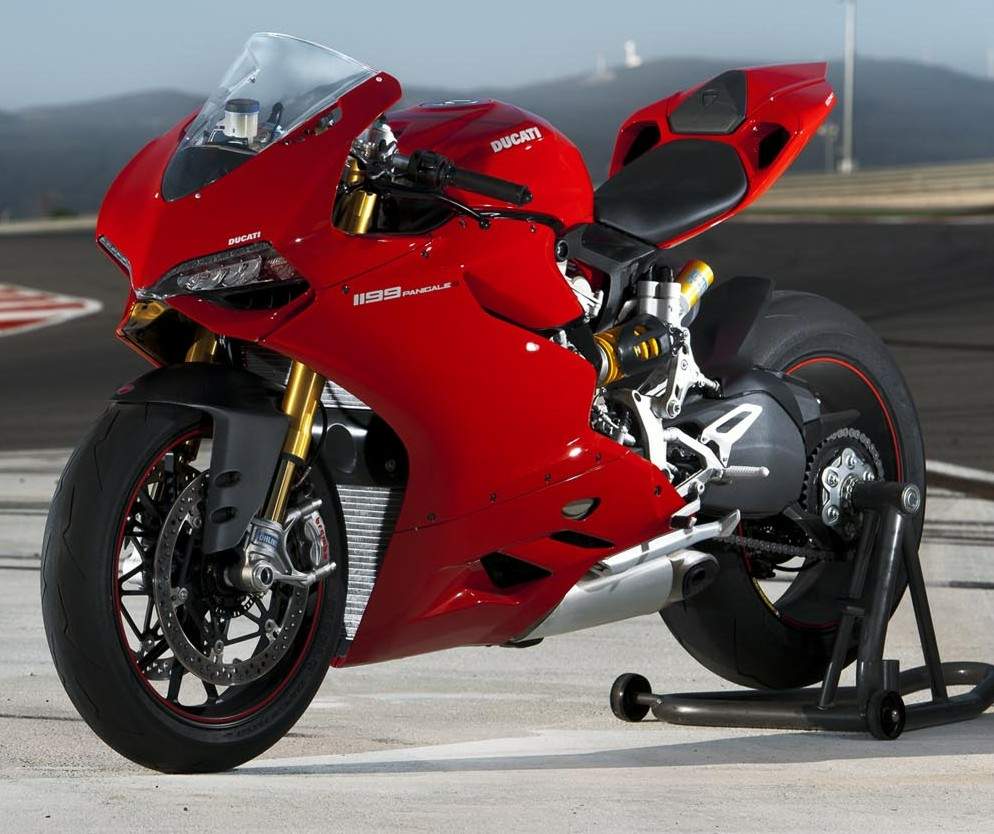 From Ducati, all eyes were on the 1199 Panigale. This bike is the replacement for not only the 1198 but also for the Testastretta engine that has served Ducati well for so many years. The Testastretta can trace its roots all the way back to the Ducati Pantah, which debuted in 1980. The engine in the Pantah was 500cc, air-cooled and SOHC. Over the course of 30 years, the engine came to have 1198cc, liquid-cooling, DOHC and 170 hp.
The new engine is 1199cc and pumps out 195 hp, making it the most powerful twin cylinder engine you can buy. This engine heralds another change for Ducati: the ubiquitous L-Twin is no more. The V-Twin's cylinders are still 90 degrees apart but they have been rotated back, resembling a typical V-Twin arrangement.
Surrounding the engine is an all-new monocoque chassis, giving the bike a dry weight of 362 lbs. That's astonishing, especially with an engine that puts out 195 hp. The Panigale is also overflowing with three letter acronyms like ABS, DTC, DES, DQS, EBC, RbW and TFT. It's best to get the monoposto version so you don't bore your passenger while explaining all the acronyms.
Ducati also showed the Diavale Chromo, which is a restyling of the Diavale. Basically, they gave the tank a black-chrome effect, covered the rest of the bike in black paint and hiked up the price. Next to the Chromo was the 848 Evo Corsa Special Edition. This 848 has an Ohlins shock out back, special paint, bigger brakes, traction control, quick shifter and a really long name.
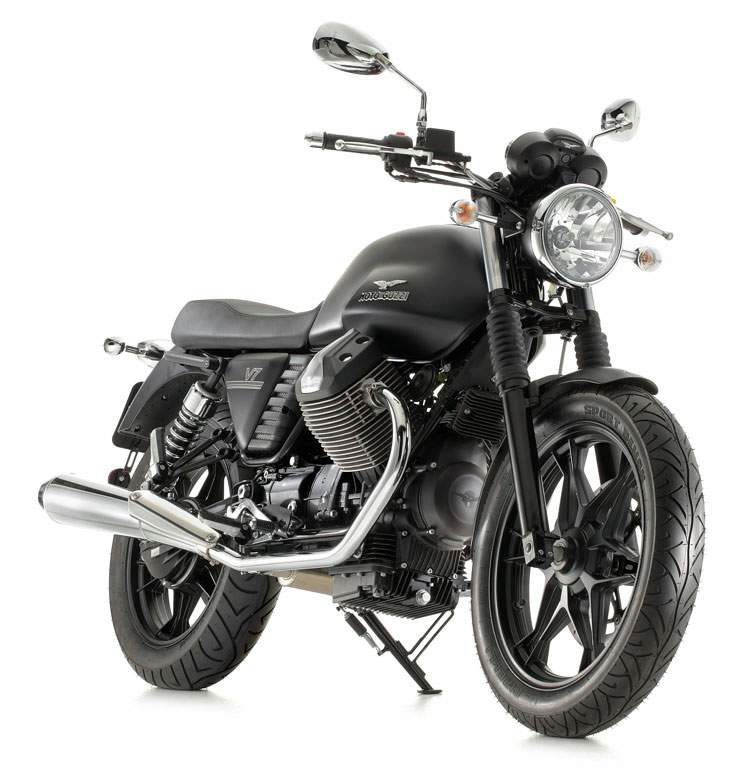
From Mandello del Lario comes a refreshed V7 in all-black paint. The spoked wheels have been replaced by mags, which are, you guessed it, black. The new V7 has a new 750cc engine with a single throttle body and a bump up in compression. 70% of this engine is completely new, including the throwback valve covers. All of this leads to more torque and a jump to 51 hp. Over all, the V7 is still absolutely gorgeous, still too slow and still too expensive.
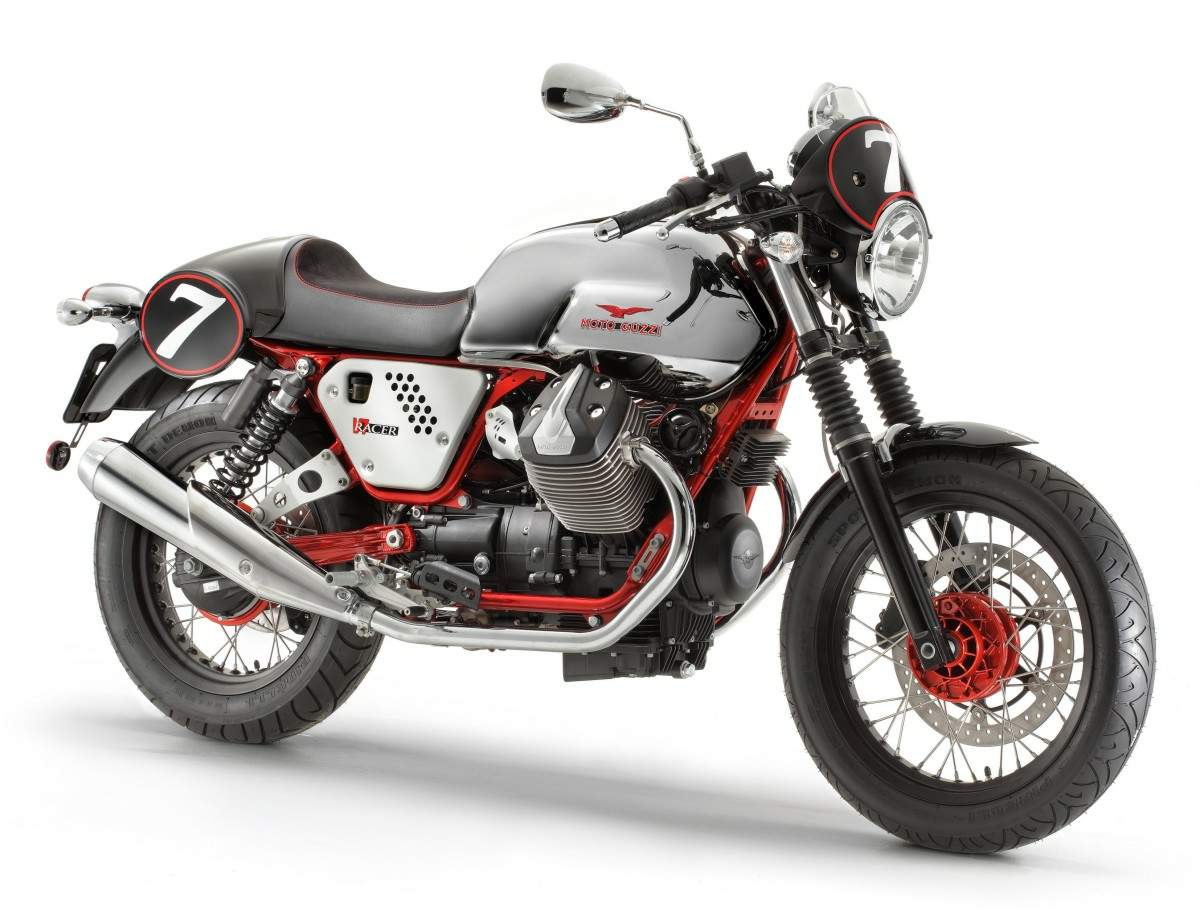 Following the regular V7 is a Special Edition model with different paint and the same specs and the Racer. The Racer (above) takes the place of the V7 Cafe Classic and has a chrome gas tank, a special seat, clip-ons and a small flyscreen above the headlamp. You might be interested in the new spoked wheels that reduce weight by 1,440 grams up front and 860 grams in the back. To put those numbers in perspective, that's less than Ozzy Osbourne's daily cocaine intake during the 1970s. Overall, the Racer is a ghastly replacement for the classically beautiful Cafe Classic. At least it has more power.
Bimota's entry into the naked bike segment is the DB9 Brivido, based upon the Ducati Streetfighter. This model is also awash in carbon fiber but is built around the liquid-cooled 1198cc twin that blasts out 162 hp. Yes, it has fully-adjustable suspension from Marzocchi and Extreme Tech but this time the front forks are 43mm, compared to the 50mm forks on the Bimotard. Stopping all this carbon fiber are the same big Brembos but this time they're bolted to lightweight wheels from O.Z.
The new engine is 1199cc and pumps out 195 hp, making it the most powerful twin cylinder engine you can buy. This engine heralds another change for Ducati: the ubiquitous L-Twin is no more. The V-Twin's cylinders are still 90 degrees apart but they have been rotated back, resembling a typical V-Twin arrangement.
Surrounding the engine is an all-new monocoque chassis, giving the bike a dry weight of 362 lbs. That's astonishing, especially with an engine that puts out 195 hp. The Panigale is also overflowing with three letter acronyms like ABS, DTC, DES, DQS, EBC, RbW and TFT. It's best to get the monoposto version so you don't bore your passenger while explaining all the acronyms.
Ducati also showed the Diavale Chromo, which is a restyling of the Diavale. Basically, they gave the tank a black-chrome effect, covered the rest of the bike in black paint and hiked up the price. Next to the Chromo was the 848 Evo Corsa Special Edition. This 848 has an Ohlins shock out back, special paint, bigger brakes, traction control, quick shifter and a really long name.
From Mandello del Lario comes a refreshed V7 in all-black paint. The spoked wheels have been replaced by mags, which are, you guessed it, black. The new V7 has a new 750cc engine with a single throttle body and a bump up in compression. 70% of this engine is completely new, including the throwback valve covers. All of this leads to more torque and a jump to 51 hp. Over all, the V7 is still absolutely gorgeous, still too slow and still too expensive.
Saturday, November 5, 2011
Going Naked with MV Agusta
All three people who read this blog have probably figured out by now that I like MV Agusta's bikes. They are fantastically beautiful Italian exotica and that really turns me on. So I guess it was only a matter of time before a post about the 675 Brutale made it on here.
Well, the wait is over.
A few days ago, the 675 Brutale was introduced to the world and my body temperature has just now begun to cool down to normal levels. The bike is just gorgeous. It's stylish, modern, detailed, aggressive, restrained, classic, avant garde, unmistakable and provocative. Above all, though, it's quintessentially Italian.
The bodywork and the frame come together in a seamless fashion. On a lot of naked bikes, the body looks like a bit of plastic plopped on the frame. It looks like an afterthought. On the 675 Brutale, the bodywork and the frame are woven together, as they should be.
MV has also done some interesting things with the Brutale's colors. The plastic side panels on the seat can be had in beige and silver and the seat can be had in brown or black. The contrast in colors of the white bike with beige panels and a brown seat looks really good. Far too many bikes today are covered with a boring coat of black. It's nice to see some different colors and some new options with contrasting colors. The Brutale does have some black plastic around the radiator but that's inevitable. At least the engine is silver.
What really tickles my fancy are the exhausts. MV's F4 line, with its four pipes sticking out from under the seat, held the crown for best-looking exhaust. The 675 line might challenge that, though. The three short pipes poke out of the right side of the bike like guns on a WWII fighter. They even come with bronze tips. I can already hear the scorching wail of the three-cylinder engine just by glancing at the exhaust.
Yes, that's right; MV Agusta has a 675cc triple just like some other European motorcycle company. Unlike that other company's triple, which makes 105 hp, the MV's triple makes 115 hp. It also makes 52 lb/ft of torque, which is two more. The MV, though, makes its power and torque higher in rev range. The MV might be lighter or heavier and that could make a difference. I don't know which bike is heavier because the other company publishes wet weight and MV publishes dry weight. I'll just say the Brutale 675 weighs 358 lbs dry and move on.
Surrounding the engine is a frame made from steel tubing and aluminum. Attached to the frame are 43mm upside-down forks at the front and a single-sided swingarm with a Sachs shock at the back. Halting forward progress are big 320mm radial brakes from Brembo. The front calipers have four pistons each, as if you couldn't guess.
The mechanical specs are all very nice but what gets me is the traction control. It's called MVICS and it has eight settings. How many settings do you need? I wonder if I can think of eight settings. Here goes: off, sport, race, tarmac, gravel, snow, power slide and donut. Anyway, what's wrong with two settings: off and on?
And there a few other niggles to point out. The rear fender looks like a crane hanging off the back. It's like a big sign saying "this is here because the law says it has to be here." I imagine most owners will chuck it in the trash immediately.
And not even MV's team of Michelangelos can make a catalytic converter look visually appealing. It's like a blob of metal stuck on the bottom of the bike. Also visually unappealing is the LCD dashboard. The face looks like something you'd find on a treadmill and its placement above the headlamp is awkward.
None of these niggles, though, distract from the overall goodness of the Brutale 675. MV continues to bring out gorgeous new pieces of art brimming with technology and speed. Here's hoping that trend continues.
 Is the 675 Brutale the best-looking naked? It's hard to argue against it. I like the white paint, brown seat and beige side panels. The contrasting colors go together well and give the bike a touch of class missing in other sporty nakeds.
 Of course the bike looks best from this angle. Look at the exhausts. They look like they're ready to unleash a burst of .50 cal on some unsuspecting ground targets. I like the wheels, too.
Well, the wait is over.
A few days ago, the 675 Brutale was introduced to the world and my body temperature has just now begun to cool down to normal levels. The bike is just gorgeous. It's stylish, modern, detailed, aggressive, restrained, classic, avant garde, unmistakable and provocative. Above all, though, it's quintessentially Italian.
The bodywork and the frame come together in a seamless fashion. On a lot of naked bikes, the body looks like a bit of plastic plopped on the frame. It looks like an afterthought. On the 675 Brutale, the bodywork and the frame are woven together, as they should be.
MV has also done some interesting things with the Brutale's colors. The plastic side panels on the seat can be had in beige and silver and the seat can be had in brown or black. The contrast in colors of the white bike with beige panels and a brown seat looks really good. Far too many bikes today are covered with a boring coat of black. It's nice to see some different colors and some new options with contrasting colors. The Brutale does have some black plastic around the radiator but that's inevitable. At least the engine is silver.
What really tickles my fancy are the exhausts. MV's F4 line, with its four pipes sticking out from under the seat, held the crown for best-looking exhaust. The 675 line might challenge that, though. The three short pipes poke out of the right side of the bike like guns on a WWII fighter. They even come with bronze tips. I can already hear the scorching wail of the three-cylinder engine just by glancing at the exhaust.
Yes, that's right; MV Agusta has a 675cc triple just like some other European motorcycle company. Unlike that other company's triple, which makes 105 hp, the MV's triple makes 115 hp. It also makes 52 lb/ft of torque, which is two more. The MV, though, makes its power and torque higher in rev range. The MV might be lighter or heavier and that could make a difference. I don't know which bike is heavier because the other company publishes wet weight and MV publishes dry weight. I'll just say the Brutale 675 weighs 358 lbs dry and move on.
Surrounding the engine is a frame made from steel tubing and aluminum. Attached to the frame are 43mm upside-down forks at the front and a single-sided swingarm with a Sachs shock at the back. Halting forward progress are big 320mm radial brakes from Brembo. The front calipers have four pistons each, as if you couldn't guess.
The mechanical specs are all very nice but what gets me is the traction control. It's called MVICS and it has eight settings. How many settings do you need? I wonder if I can think of eight settings. Here goes: off, sport, race, tarmac, gravel, snow, power slide and donut. Anyway, what's wrong with two settings: off and on?
And there a few other niggles to point out. The rear fender looks like a crane hanging off the back. It's like a big sign saying "this is here because the law says it has to be here." I imagine most owners will chuck it in the trash immediately.
And not even MV's team of Michelangelos can make a catalytic converter look visually appealing. It's like a blob of metal stuck on the bottom of the bike. Also visually unappealing is the LCD dashboard. The face looks like something you'd find on a treadmill and its placement above the headlamp is awkward.
None of these niggles, though, distract from the overall goodness of the Brutale 675. MV continues to bring out gorgeous new pieces of art brimming with technology and speed. Here's hoping that trend continues.


Subscribe to:
Posts (Atom)